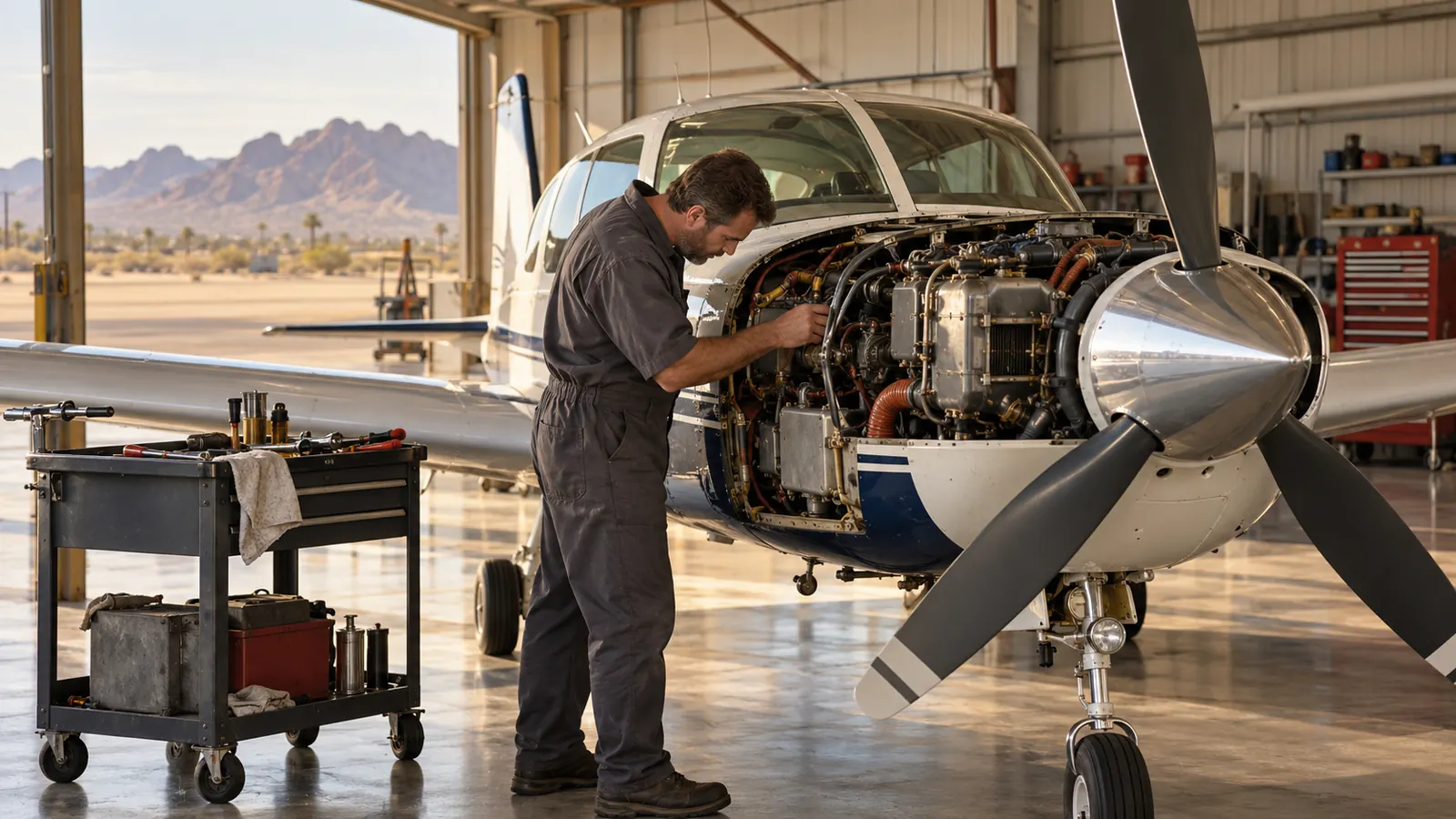
What aviation buyers check first
- Repair station certificates or mechanic authorizations, and who holds them
- Hangar lease at Falcon Field or Gateway, its term and transfer terms
- Licensed mechanics and inspectors who stay after the sale
- Customer mix across flight schools, private owners, charter and government
- Tooling, test equipment and parts inventory
Certificates and People Go Together
Aviation maintenance runs on federal approvals and the licensed people who hold them.
A buyer has to know whether the certificate belongs to the company, how it carries over after a sale and which inspectors are needed to keep it active. Losing a key inspector can stall the shop.
An aviation attorney should map out how any approvals continue under new ownership.
The Hangar Lease
Space at Falcon Field and Phoenix-Mesa Gateway Airport is limited, so a good hangar lease has real value. Airport leases often require approval for assignment and can come with their own terms. Read yours closely and ask the airport about the process early.
Customers and Contracts
Flight schools generate steady inspections and repairs. Private owners return for annuals. Charter operators, corporate flight departments and government contracts can be large and lumpy. Buyers look for a spread that doesn't depend on one fleet.
Written agreements with your biggest customers help a buyer trust the revenue.
Safety and Quality Records
A buyer will review your quality manual, past audits and any incidents. A clean record and a shop that follows its own procedures are worth money. Gaps in paperwork are a common reason aviation deals slow down or reprice.
Equipment and Inventory
Tooling, calibrated test equipment and rotable parts can add meaningful value, but only with records. Calibration logs, inventory counts and traceability paperwork let a buyer price what you have instead of discounting it.
Seasonality and Backlog
Winter brings more flying to the Valley, and flight school schedules shape the work. Show a buyer monthly revenue and your current backlog of scheduled inspections so they can see the shop stays busy.
Who Buys These Shops
Buyers include larger maintenance groups adding a location, aerospace companies near Gateway, and experienced mechanics backed by investors. Some come from out of state.
Larger deals often include a transition period with the owner. See how buyers price a small business for how they turn earnings into an offer.
Preparing the Shop
- Organized work orders and logbook entries
- Current certificates, manuals and training records
- A parts and tooling list with values
- Staff roster with licenses and ratings
Read preparing your company for sale for the general list. Shops in the Gateway area also draw from Queen Creek and Gilbert; see business brokers serving Queen Creek, AZ.
For a confidential range, send the form or call (480) 555-0124.